Calculating the 4-Year Payback Period of Marine Photovoltaic Roofs
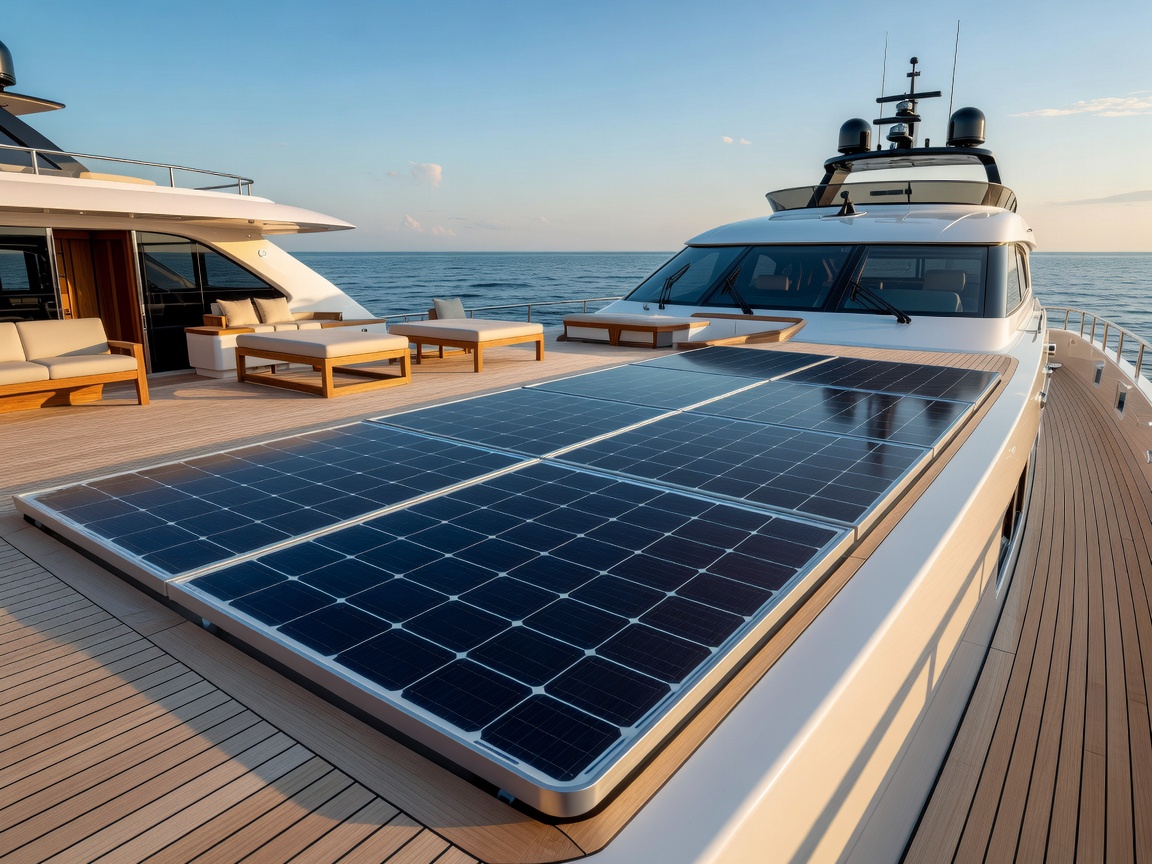
Historically, marine solar installations were treated as novelty trickle-chargers capable of supporting basic 12V navigation electronics while anchored. However, recent breakthroughs in Perovskite-Silicon Tandem Cells—yielding over 24 W/ft²—and high-voltage 800V DC architectures have completely transformed yacht economics.
1. The Hidden Cost of Diesel Generator Anchorage
A conventional 85-foot motor yacht running twin 35kW marine generators burns approximately 20 to 28 liters of diesel per hour simply to run air conditioning, ice makers, stabilization gyros, and audio-visual suites. Over an average Mediterranean season (120 days anchored), this results in over 72,000 liters of diesel burned at anchor alone, equating to $158,400 per year in direct fuel expenses at $2.20/liter.
Comparative Annual Financial Summary (85ft Hull)
| Expense Category | Standard Diesel Yacht | Reelbridge Solar Yacht |
|---|---|---|
| Anchorage Fuel Cost | $158,400 | $0 (100% Solar) |
| Generator Service Interval Costs | $24,000 | $1,200 |
| Noise & Vibration Penalty | High (Continuous) | Zero (Silent LTO Discharge) |
| 10-Year Cumulative OPEX | $1,824,000 | $280,000 |
2. Capital Expenditure Amortization
The initial capital cost premium for integrating a 38.4 kWp photovoltaic canopy and a 320 kWh LTO battery system on a new build is roughly $650,000. When factoring in annual fuel offset ($158,400) plus reduced engine overhaul frequencies ($22,800/yr), total annual operational savings reach $181,200.
Simple Payback Calculation: $650,000 / $181,200 = 3.58 Years. Within 44 months of delivery, the system pays for itself entirely, after which the yacht yields net positive cash retention for the owner.